
The short answer
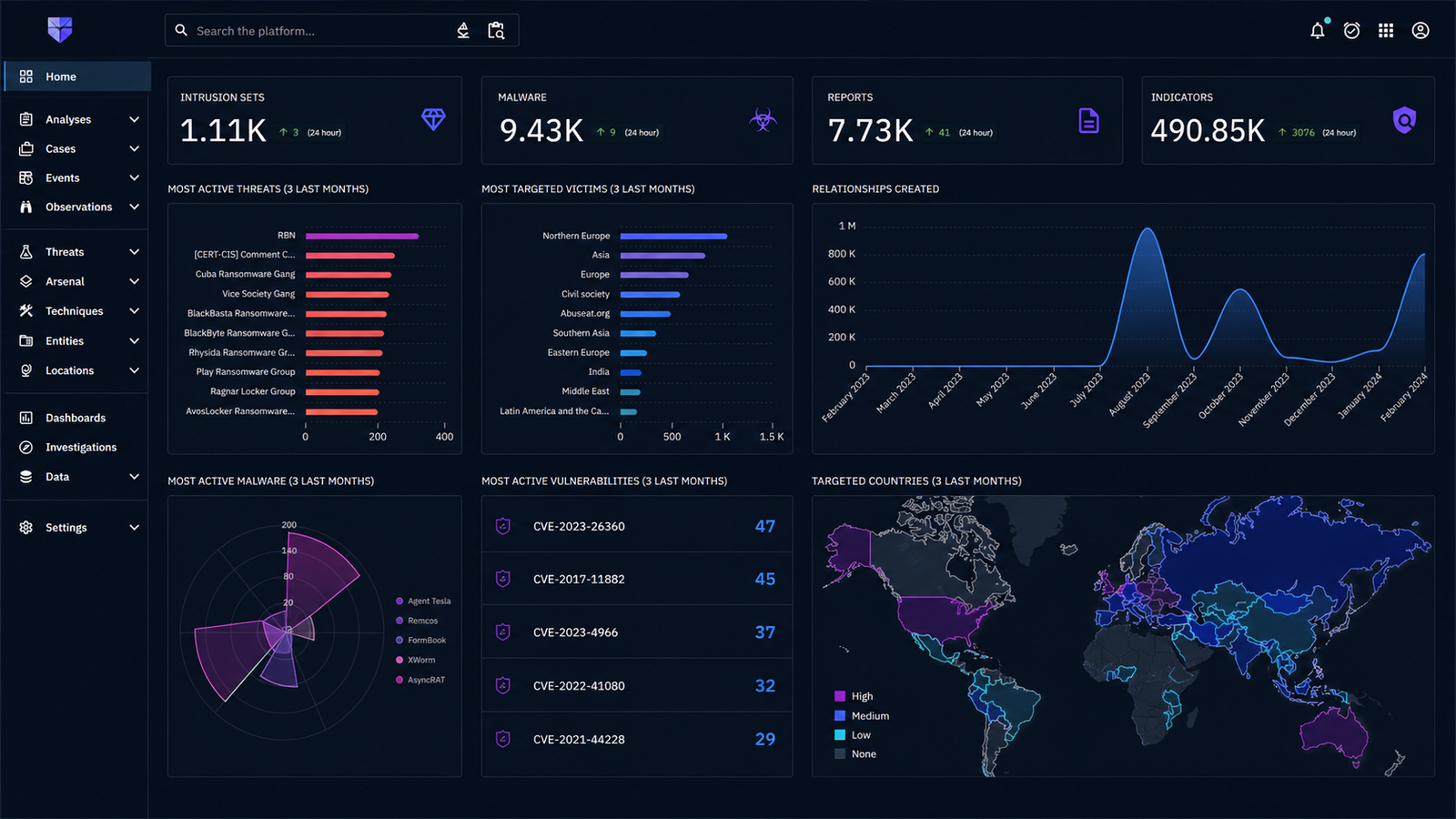
A cyber fusion centre brings the people, data, intelligence, workflows, and decision authority required to manage cyber risk into one coordinated operating model. It connects security monitoring with threat intelligence, detection engineering, incident response, vulnerability context, digital forensics, and business priorities so that teams can move from an isolated alert to an informed action without losing time between tools or departments.
A conventional security operations centre often concentrates on monitoring and triage. A fusion centre extends that mission. It asks not only whether an event is malicious, but who may be behind it, which assets and business services matter, what the likely next action is, which containment decision is proportionate, and what the organization should change afterwards.
A useful test: if intelligence, detection, investigation, response, and business risk still operate as separate queues, the organization has tools in the same room—not a fused operation.
Why security teams move toward a fusion model
Most security programs do not suffer from a complete absence of data. They suffer from fragmentation. Endpoint alerts sit in one platform, network evidence in another, threat reports in a third, and critical asset information somewhere else. Analysts spend valuable time assembling context before they can decide whether an alert matters.
The fusion model reduces that coordination cost. It creates a common operational picture and a repeatable path from signal to decision. This aligns well with the continuous lifecycle described by the NIST Cybersecurity Framework: governance and identification shape what matters; protection and detection create preventive and observable controls; response and recovery convert findings into action and resilience.
Faster context
Analysts see asset criticality, identity, exposure, intelligence, and related activity alongside the original signal.
Fewer handoff failures
Shared cases and defined ownership reduce the information lost between monitoring, response, engineering, and leadership.
Threat-led priorities
Controls and hunts can be focused on adversary behaviours relevant to the organization instead of generic feed volume.
Closed-loop improvement
Lessons from incidents and hunts become new detections, hardening actions, playbook changes, and intelligence requirements.
The six capabilities that make fusion real
There is no single mandatory architecture, but effective fusion centres consistently cover six capabilities. The exact technology can vary; the operational outcomes should not.
Unified visibility
Normalize and correlate relevant endpoint, identity, cloud, network, application, vulnerability, and external exposure data.
Threat intelligence
Collect, assess, enrich, and connect indicators, adversary behaviours, campaigns, and strategic intelligence to the environment.
Detection and hunting
Translate hypotheses and intelligence into analytics, detection rules, hunts, and coverage mapped to expected attacker behaviour.
Investigation and case management
Preserve evidence, connect related observations, document decisions, and maintain a traceable investigation record.
Orchestrated response
Use approved playbooks, human decision points, and automated actions to contain threats without creating unnecessary operational impact.
Decision support
Communicate technical findings in terms of affected services, exposure, likely impact, confidence, and recommended business action.
How the operating loop should work
Fusion is best understood as a loop rather than a stack of products. Every stage has an owner, an expected output, and a feedback path. The goal is to preserve context as work moves from machines to analysts and from analysts to decision-makers.
| Stage | Core question | Expected output |
|---|---|---|
| Observe | What changed or behaved unexpectedly? | A signal with source, time, entity, and confidence |
| Contextualize | Why could this matter here? | Asset, identity, exposure, and threat context |
| Decide | What is the most proportionate next action? | Documented priority, owner, and response decision |
| Act | How do we reduce impact safely? | Containment, investigation, recovery, or hardening action |
| Learn | What should become stronger after this? | New detections, controls, intelligence requirements, and playbook updates |
Architecture and governance questions to resolve first
A fusion programme should begin with operating questions, not a product shortlist. Decide what must be protected, which decisions the centre is authorized to make, how evidence will be retained, and how teams will collaborate during high-pressure events. Technology selection becomes clearer once those boundaries exist.
- Which business services, identities, data stores, and external dependencies are considered critical?
- Which telemetry is essential for decisions, and where are the material visibility gaps?
- Who owns triage, investigation, containment approval, recovery, communications, and lessons learned?
- What information can be shared internally or externally, at what classification, and with which controls?
- Which actions may be automated, and which require accountable human authorization?
- How will detection logic, playbooks, intelligence, evidence, and case records be versioned and reviewed?
Measure decisions and outcomes—not alert volume
Alert counts and ingestion volume describe workload, not effectiveness. A fusion centre should measure whether it improves the quality and speed of security decisions. Useful measures include time to establish material context, time from validated detection to containment decision, percentage of critical incidents with complete evidence records, detection coverage against priority adversary behaviours, recurrence of previously addressed failure modes, and the age of unresolved high-risk visibility gaps.
Maturity is visible when the centre can explain why a threat matters to this organization, recommend a proportionate action, show the evidence behind the decision, and demonstrate what improved afterwards. That is the point where security operations becomes a business capability rather than a collection of monitoring tools.
Standards and guidance
- NISTThe NIST Cybersecurity Framework (CSF) 2.0
- UK NCSCBuilding a Security Operations Centre — Buyer’s Guide
- MITRE ATT&CKThreat Intelligence with MITRE ATT&CK
This article provides general technical guidance and is not legal, regulatory, or case-specific advice.